
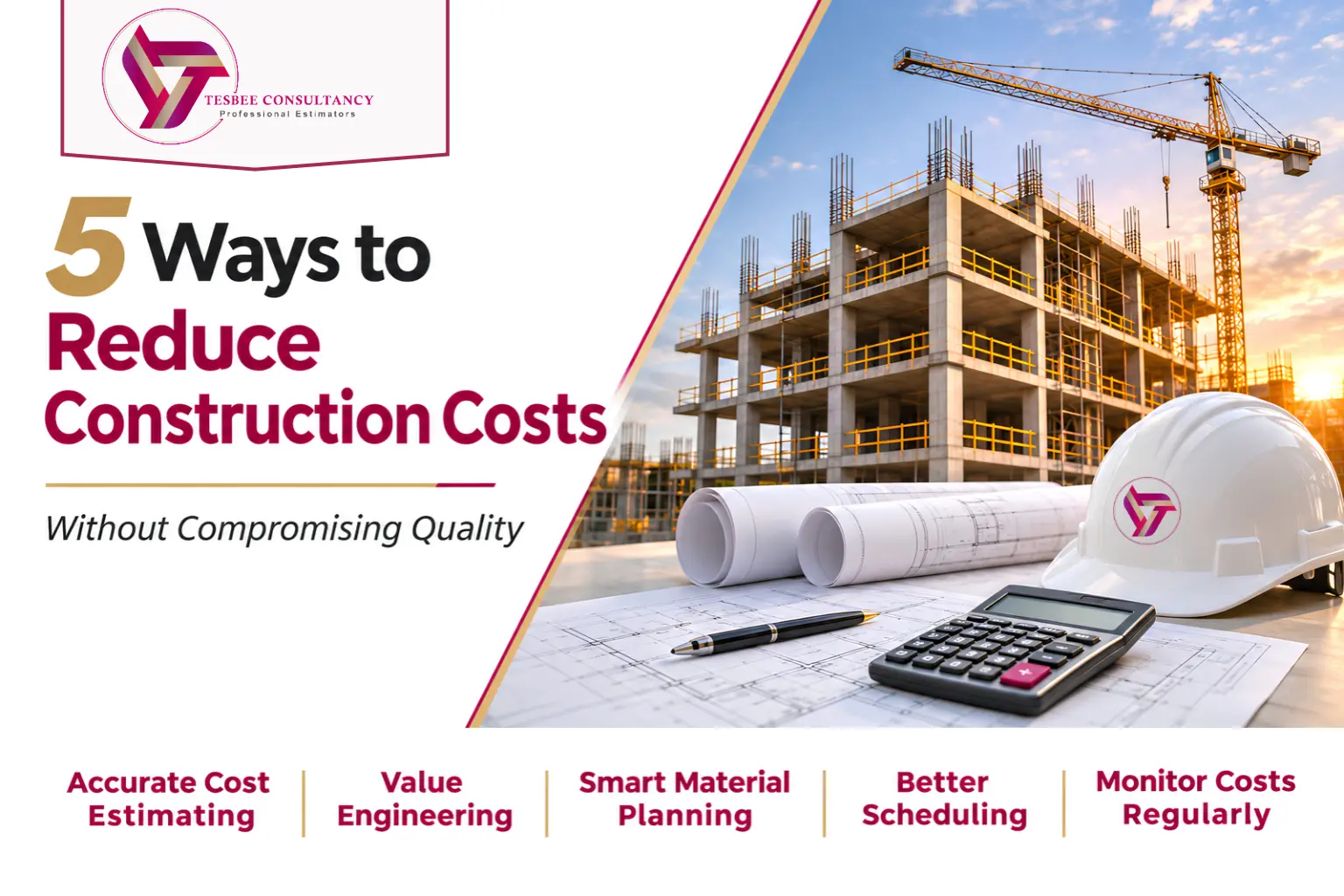
5 Ways to Reduce Construction Costs Without Compromising Quality
- gwbdy
- November 20, 2026
- Uncategorized
- 0 Comments
Managing construction costs is one of the biggest challenges facing developers, contractors, architects and project owners. Rising material prices, labour expenses, project delays and unexpected design changes can quickly affect a construction budget.
However, reducing construction costs does not mean selecting cheaper materials or sacrificing the quality of a finished project. Instead, it involves identifying unnecessary expenses, improving resource allocation and making informed decisions throughout the construction process.
Effective construction cost management begins long before work starts on site. From preparing accurate estimates to monitoring project expenses, every stage presents opportunities to improve efficiency and control costs.
So, how can construction professionals reduce project expenses while maintaining quality and performance?
Here are five practical strategies to help achieve better construction cost control.
1. Invest in Accurate Construction Cost Estimating
Accurate construction cost estimation is essential for effective budget planning and financial control.Before starting a construction project, contractors and developers need a clear understanding of the expected costs associated with materials, labour, equipment and other project requirements.
An inaccurate or incomplete estimate can lead to budget shortfalls, unexpected expenses, material shortages and costly project delays.
Professional construction cost estimating helps identify the financial requirements of a project before construction begins. Through detailed quantity takeoffs and cost calculations, project teams can develop a realistic budget based on the available drawings, specifications and project scope.
How accurate estimating helps reduce costs:
- Identifies material and labour requirements before construction.
- Reduces the risk of underestimating project expenses.
- Helps prevent unnecessary purchases and budget gaps.
- Provides a reliable foundation for tender preparation.
- Supports better financial planning and decision-making.
For example, a detailed quantity takeoff can help a general contractor identify the exact quantities of concrete, steel, drywall and other materials required. This reduces the risk of ordering excessive materials or discovering shortages during construction.
Investing in accurate estimating at the beginning can help prevent much larger financial problems later.
2. Apply Value Engineering to Improve Project Value
Value engineering is a structured approach to improving the value of a construction project by evaluating its design, materials, systems and construction methods.
The objective is not simply to find the cheapest alternative. It is to identify opportunities to achieve the required functionality, quality, safety and performance at a more efficient overall cost.
During the pre-construction stage, project teams can review specifications and explore alternative solutions that may reduce expenses without affecting essential project requirements.
How value engineering helps reduce costs:
- Identifies cost-effective alternative materials.
- Evaluates construction methods for better efficiency.
- Eliminates unnecessary design complexity.
- Improves the use of materials and resources.
- Helps balance initial costs with long-term performance.
For instance, a project team may evaluate alternative flooring, insulation or structural solutions that meet the required specifications while offering better overall value.
However, every proposed alternative should be carefully reviewed to ensure compliance with applicable building codes, design requirements, durability standards and client expectations.
The best value engineering decisions reduce unnecessary costs while protecting the overall quality of the project.
3. Plan Materials and Resources Efficiently
Materials represent a significant portion of many construction budgets. Poor material planning can result in excessive purchasing, wastage, storage expenses and unnecessary delays.
Ordering materials without accurate quantity calculations may lead to overordering or shortages. Both situations can increase project expenses.
Effective material planning starts with detailed quantity takeoffs and a clear understanding of the project requirements.
How better material planning helps reduce costs:
- Reduces material wastage and unnecessary purchases.
- Improves inventory and storage management.
- Helps coordinate material deliveries.
- Minimises shortages and construction interruptions.
- Supports better supplier and subcontractor coordination.
For example, accurate calculations of concrete, reinforcement, tiles, drywall and finishing materials help contractors determine purchasing requirements before construction activities begin.
Project teams should also consider material availability, supplier lead times, delivery schedules and storage conditions when preparing procurement plans.
By combining accurate material calculations with effective procurement planning, contractors can minimise waste and make better use of available resources.
4. Improve Construction Scheduling and Project Coordination
Time management has a direct impact on construction costs. Delays can increase labour expenses, equipment rental charges, site overheads and other project-related costs.
Poor communication between contractors, subcontractors, suppliers and consultants can also lead to duplicated work, scheduling conflicts and unnecessary rework.
A well-organised construction schedule helps ensure that activities are completed in the correct sequence and that resources are available when required.
How effective scheduling helps reduce costs:
- Minimises unnecessary project delays.
- Improves labour and equipment utilisation.
- Reduces downtime between construction activities.
- Supports better coordination between trades.
- Helps prevent costly rework and scheduling conflicts.
For example, coordinating electrical, plumbing and HVAC installations before closing walls and ceilings can help prevent conflicts and reduce the need for expensive corrective work.
Regular progress reviews and clear communication between project stakeholders are essential for identifying potential delays early.
Effective construction project scheduling improves productivity and helps keep projects aligned with their approved budgets and timelines.
5. Monitor Project Costs Throughout Construction
Preparing an accurate estimate and approving a project budget are only the beginning. Construction expenses must be monitored continuously to ensure that actual costs remain aligned with the original financial plan.
Changes in material prices, additional work, design revisions and unforeseen site conditions can affect the overall project budget.
Without regular cost monitoring, small financial variations can develop into significant budget overruns.
How continuous cost monitoring helps reduce costs:
- Identifies budget differences at an early stage.
- Tracks actual expenses against estimated costs.
- Improves control over variations and additional work.
- Helps project teams make informed financial decisions.
- Supports transparency and accountability.
For example, comparing actual material purchases and subcontractor costs against the original estimate can help identify unexpected increases.
Project managers should regularly review cost reports, approved variations, purchase orders and project progress to maintain better financial control.
Early identification of cost issues allows project teams to investigate problems and take corrective action before they significantly affect the project budget.
Additional Considerations for Better Construction Cost Control
In addition to these five strategies, construction professionals should consider the following practices:
Review project drawings and specifications carefully: Identifying missing information, inconsistencies and potential design conflicts before construction can help reduce costly changes.
Compare supplier and subcontractor quotations: Evaluating quotations based on scope, quality, specifications and pricing helps ensure better purchasing decisions.
Maintain clear communication: Good communication between project stakeholders reduces misunderstandings, duplicated work and unnecessary delays.
Consider long-term value: Selecting materials and systems based only on initial price may result in higher maintenance and replacement expenses later. Durability and lifecycle costs should also be considered.
Conclusion: Build Smarter, Not Cheaper
Reducing construction costs without compromising quality requires careful planning, accurate estimating and continuous project monitoring.
By investing in professional cost estimating, applying value engineering, managing materials efficiently, improving project scheduling and monitoring expenses throughout construction, project teams can identify savings opportunities and maintain better budget control.
The objective is not simply to spend less. It is to achieve the best possible value while meeting the project’s quality, performance and delivery requirements.
At Tesbee Consultancy, we support architects, engineers, developers, general contractors and subcontractors with professional construction cost estimating services.
Our services include:
- Pre-construction cost estimating.
- Quantity takeoffs and material calculations.
- Subcontractor estimating.
- MEP estimating.
- Budget preparation and cost management.
- Construction project scheduling support.
We provide detailed estimates in Excel, supported by full-colour marked-up drawings, with a typical turnaround of 72 hours, depending on project scope and complexity.

Leave A Comment